What’s New in Minecraft 1.26/1.27? Key Features & Updates
What’s New in Minecraft 1.26/1.27? Key Features & Updates
You’ll spot bigger, sharper changes across Minecraft’s recent releases—new biomes, reworked world generation, fresh blocks and items, and expanded mob behaviour that change how you explore and build. The core of 1.26/1.27 centres on expanded world content and gameplay systems: new environments and creatures, meaningful building materialsand crafting additions, and quality-of-life mechanics that shift both survival and creative play.

Expect changes that alter exploration strategies and base design, plus tweaks to trading, lighting and entity interactions that affect day-to-day play. Small but impactful technical updates improve performance and modding compatibility, so your long-term worlds benefit as much as your new adventures.
Key Takeaways
- The updates add new environments and creatures that reshape exploration.
- New blocks, items and crafting options broaden building and progression.
- Technical and gameplay tweaks improve stability and player interactions.
New Dimensions and World Generation

Minecraft 1.26/1.27 adds a major new dimension, several biome and terrain overhauls, fresh structures and portal mechanics, and raised world height with environmental systems that feel distinct from the Overworld and Nether. Expect exploration incentives: new resources, mobs, and vertical space that change how you build, mine and travel.
Beginning Dimension Overview
The Beginning dimension introduces a wholly separate realm with its own blocks, mobs and resource tiers. You travel there via a dedicated portal and find exclusive ores such as Celestial Remnants and unique liquids like Warped Soda. Armour and tools crafted from new materials behave differently — some float in lava and resist several environmental hazards — so you must adapt your gear choices for prolonged stays.
Hostile encounters include high-health beasts and biome-specific mobs that trigger new combat strategies. The dimension also contains specialised crafting stations, for example a Crimson Forge, which you’ll use to smelt dimension-only materials. Resource scarcity and unique drops make the Beginning a purposeful endgame or midgame destination rather than a simple novelty.
New Biomes and Terrain Types
The update adds multiple Beginning biomes with distinct visual themes and mechanics. Examples include Lindigo Forests, Shattered Caverns, Timik Groves and Fizzy Oceans; each biome offers different plant life, light-emitting flora and biome-specific blocks like Purified Tylium and Shale. Vegetation can affect movement and yields — mint plants give speed effects, while snail slime blocks alter traction.
Terrain generation introduces tall, layered features (Timik Stems can reach great height) and cavernous systems rich in Redstone Crystal veins. Some biomes contain liquid types that react uniquely to items — Warped Soda interacts with sponges and mint blocks — so you’ll need to plan transport and collection methods. Biome-specific resources also feed new crafting trees for tools, armour and decorative blocks.
Unique Structures and Portals
You locate the Beginning via specialised portal structures and shrine variants underground. Celestial Portals come in multi-block top/middle/bottom portions that must be lit in the correct order to open the gateway. Ancient Portal Shrineshide portals beneath layers of terrain, creating exploration puzzles and guarded loot rooms.
Inside the dimension you’ll encounter new structures such as Ancient Portal Shrines, crystalline caverns and biome-specific ruins that house crafting stations and mob spawners. Structures often contain dimension-exclusive blocks like Purified Lindigo Planks and Confetti Blossoms. Loot tables include Celestial Remnants, Warped Fragments and other materials needed to upgrade gear, so searching structures is a key progression loop.
World Height and Environmental Changes
World height increases and layered verticality impact mine planning, base design and mob spawning. The update raises the buildable ceiling and adds new strata such as Shale and Mudstone that behave like stone variants but with different variants and decorative options. Timik Stems and towering landforms exploit the extra height, creating new cliff and canopy gameplay.
Environmental systems change fluid mechanics and block interactions. New liquids — Warped Soda, Tar and Acid — require specific handling; some items float in those liquids, others explode on contact with certain blocks. Weather and light interactions in the Beginning differ from the Overworld: some plants emit high light levels, while others change behaviour in rain or non-warped biomes. These changes affect mob behaviour, farming viability and redstone contraptions, so test builds vertically and in varied biome conditions.
Blocks and Materials
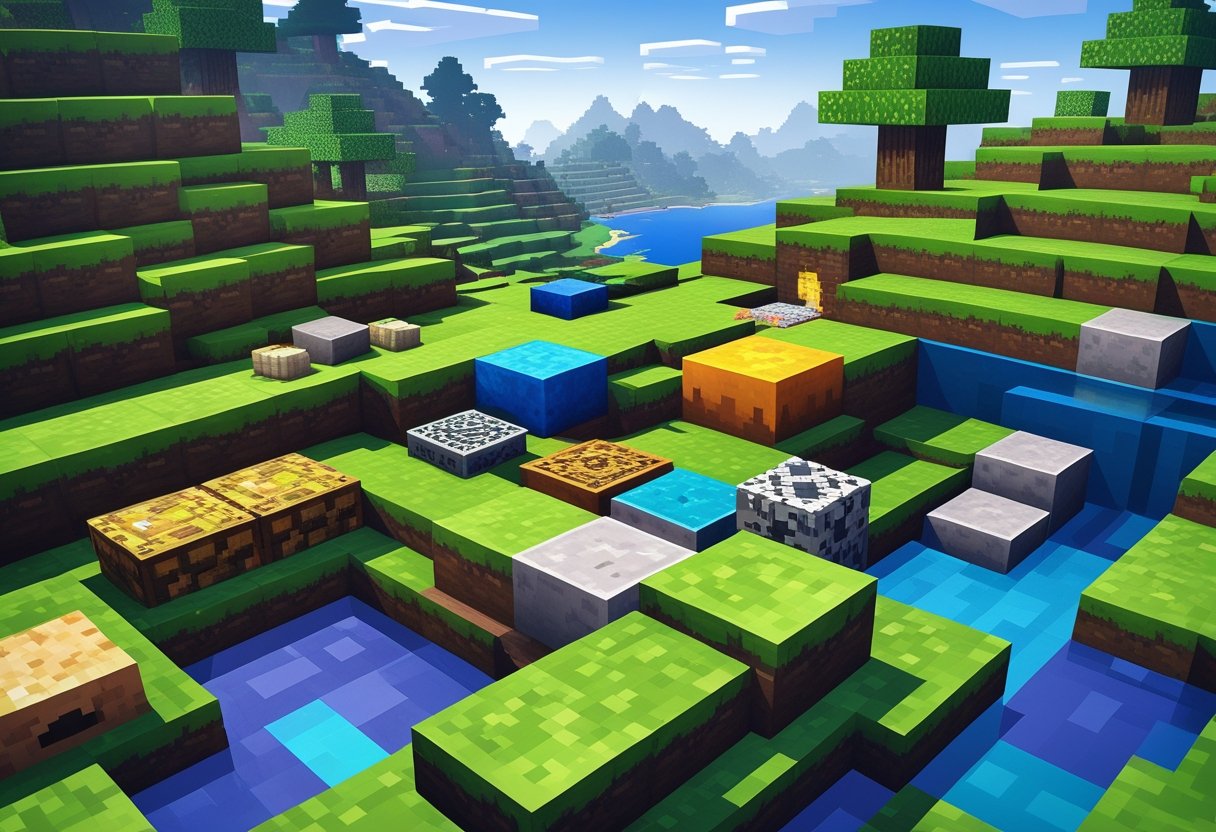
This update adds new high‑tier materials and decorative blocks, reworks a few hazardous blocks, expands storage and utility options, and introduces plant blocks with changed growth interactions. Expect new ores tied to late‑game progression and several blocks that alter how you farm, store and process resources.
Celestial Ore and Celestial Block
Celestial Ore appears in deep layers and drops a new raw material used to craft the Celestial Block. You mine Celestial Ore with at least an iron pickaxe; using Netherite tools speeds extraction and increases fortune yield.
The Celestial Block functions as both a strong decorative block and a crafting component for advanced gear upgrades. It resists explosions more than diamond blocks but remains mineable without specialised explosives.
You can craft a Celestial Block from nine Celestial Ingots, which you obtain by smelting Celestial Ore. The block also serves as a beacon‑level base for upgraded effects when combined with a fully powered beacon.
Badly Damaged Obsidian and New Ores
Badly Damaged Obsidian spawns in high‑pressure End chasms and has lower blast resistance than regular obsidian. You cannot craft portals with it; only fully intact obsidian works for that purpose.
This variant drops obsidian shards instead of full blocks unless you use a Silk Touch tool. Those shards feed into new reforging recipes for repairing or altering End and Nether gear.
Several new ores accompany the update besides Celestial Ore, including a scarce crystalline ore found near ancient structures. These ores integrate with existing tiers: you can combine refined forms with Netherite to create modified, higher‑durability components.
You should carry a Silk Touch pick for ore preservation and a Netherite toolset for efficient harvesting. Exploration equipment like potions and scaffolding helps with vertical ore veins.
Storage and Utility Blocks
The update introduces stacked storage blocks tuned for late‑game resources, including Celestial Storage Blocks and reinforced crates. Celestial Storage Blocks compress nine ingots into one block for compact storage and faster item transfer with hoppers.
Reinforced crates offer inventory expansion for chests: attach a crate to a chest to increase total slots without moving items. Crates preserve contents when broken with a silk‑equipped tool or via specific crate breakers.
Utility blocks include a new smelting array and a master crafting table. The smelting array processes multiple ores simultaneously and accepts fuel upgrades crafted from Netherite and Celestial materials. The master crafting table expands recipe outputs and shows advanced repair/reforge interfaces.
You can automate the smelting array with comparators and hoppers; it gives better throughput than multiple furnaces and saves fuel when processing large ore hauls.
Plant Blocks and Growth Mechanics
New plant blocks include bioluminescent fungi and tall marsh reeds that change how you farm underground and coastal biomes. Bioluminescent fungus emits low light and spreads on moist blocks; it requires a bone meal‑like reagent to accelerate growth.
Fungi produce a sapling‑like item that you plant on rich soil. Growth rates depend on nearby Celestial Block proximity and light level, so placing a Celestial Block beneath a farm increases yield chances.
Tall marsh reeds act as renewable fibre resources and can be harvested with shears or a sword. They grow in tiers: seedling, stalk and flowering top. Flowering tops drop seeds and a small chance of a potion ingredient used in Netherite‑tier brews.
You should adapt your farms: add water channels for reeds and position light sources to balance fungus spread without halting growth.
Mobs and Wildlife
This update adds distinct hostile and passive creatures, and improves AI so encounters feel more dynamic and purposeful. You’ll see new mob uses, clearer combat roles, and more lifelike passive animal behaviour.
The Warper
The Warper is a new hostile that teleports short distances to flank you in combat.
It uses a visible charge-up animation before teleporting, giving you a narrow reaction window to dodge or interrupt it.
You can interrupt the Warper by dealing damage during the charge; this cancels the teleport and briefly staggers the mob.
Warpers drop a small number of rare scraps used in mid-game crafting or tech-style blocks, making them a worthwhile threat to seek out.
They spawn in dark crystalline caverns and prefer uneven terrain where teleporting provides tactical advantage.
Expect pack behaviour: a lead Warper will attempt to corner you while others teleport to cut off escape routes.
Wailorps
Wailorps are large aquatic giants that patrol deep ocean trenches and create strong current vortices.
Their presence alters local water flow, pushing boats and players toward or away from points of interest.
You can detect Wailorps by large surface ripples and distant low-frequency calls audible underwater.
Attacking one provokes area-of-effect tail-sweeps and a temporary maelstrom that can separate you from companions or gear.
Wailorps drop unique scale fragments used for high-tier aquatic gear and decorative blocks.
They’re not constant threats; their patrols are cyclic, so you can plan encounters or avoid them while exploring trench biomes.
New Passive Creatures
Several passive species arrive with biome-specific variants and new interactions for survival and aesthetics.
Examples include cold-adapted forest animals, desert-tolerant grazers, and an underwater rideable creature introduced earlier in recent drops.
Many passive mobs now have taming or breeding mechanics that reward specific food items or environmental conditions.
You’ll need to meet feeding and habitat requirements to breed variants or obtain utility drops, like unique fibres or crafting components.
These creatures add ecosystem consistency: predators hunt juveniles, and herd animals flee in organised patterns.
That behaviour creates more believable biomes and new opportunities for controlled farming or passive mob-based challenges.
Mob Behaviour Improvements
AI improvements focus on situational awareness and intent, so mobs use cover, chase paths and team tactics more effectively.
Hostile mobs now evaluate escape routes and flanking opportunities rather than committing to a single direct attack.
Pathfinding updates let mobs navigate environmental hazards like ledges, water currents, and trapdoors with fewer glitches.
You’ll notice fewer mobs getting stuck and more realistic pursuit across complex terrain.
Mobs communicate better in groups: alarm calls attract nearby allies, and certain mobs will disengage if neutralised leaders are removed.
These changes affect combat pacing and encourage tactical play — use crowd control or leader-targeting to break coordinated attacks.
Items and Crafting
This update adds several new weapons, utility items and recipe changes that affect mid- to late-game progression. Expect new equipment with unique mechanics, a handful of standout unique items with special behaviours, and revised crafting pathways for common resources.
New Equipment and Tools
You gain access to tools that change how you approach combat and utility tasks. The Solar Blade, for example, offers a sunlight-linked damage buff that increases attack speed while exposed to daylight, making it powerful for surface raiding but less effective underground. Its durability scales with a new alloy material introduced in this update.
Armour receives modular upgrades: you can attach limited-use attachments to helmets and chestplates for night-vision or short bursts of knockback resistance. Tools now include a multipurpose excavation pick that combines axe and shovel functions with slightly reduced efficiency compared with single‑tool counterparts. Repair paths shift too; several new components require a crafting station variant rather than an anvil for full restoration.
You should note the new enchantment restrictions. Some items cannot receive the usual high-tier enchantments and instead use bespoke modifiers tied to the new materials. This forces choices between raw power and specialised utility.
Unique Items: Dynamite, Solar Blade, Creeper Crown
Dynamite replaces TNT in certain crafting recipes and behaves differently when primed. It has a short fuse by default but offers configurable charge modules you attach before ignition. These modules alter blast radius and drop behaviour, and some are craftable only from rare ores, which encourages exploration.
The Solar Blade, already mentioned, uses a day‑light sensor mechanic to grant temporary attack speed and additional light when drawn. It also emits a small light radius while held, which helps in night-time skirmishes without torches.
The Creeper Crown is a wearable trophy item dropped rarely from a modified creeper variant. When worn, it reduces explosion damage to you but attracts nearby creepers slightly more. The crown also functions as a trade item with a new villager type, making it valuable both for protection and economy. Each unique item has clear trade‑offs, so you must plan loadouts deliberately.
Resource Crafting and Recipes
Crafting recipes shift to favour data‑driven trade and modular components. Villager trades now derive from configurable trade blueprints, so some previously fixed item pathways can change per save or datapack. You will encounter new crafting station variants that enable assembly of composite items like the Solar Blade or dynamite modules.
Several common recipes gained alternate ingredients. For example, certain alloyed ingots substitute for multiple metal types in tool recipes, reducing raw material variety but adding processing steps. Potion and dye systems extend with functions like set_random_dyes and set_random_potion, allowing recipes that produce variable outcomes based on defined option lists.
A new /swing command and loot function types like villager_trade affect automation and customisation. You can author datapacks to alter trade pools, craft outputs and randomized modifiers, so recipe ecosystems become more flexible and moddable than before.
Gameplay Enhancements
This update tightens several core systems and adds new content that affects exploration, trading and player feedback. Expect refinements to villager trading, light and visual behaviour, and fresh audio that changes ambience and signalling.
Achievements and Advancement Updates
Achievements and the advancement system receive targeted updates that make goals clearer and more flexible. Several advancements now trigger based on data-driven villager trades and custom trade sets, so if you build or install datapacks you can create progression tied to specific trades or merchant behaviours.
You’ll also notice changes to how XP and trade limits behave: new number-provider settings let you control XP rewards and max uses per trade, and reputation-based discounts can modify costs dynamically. These updates give you more direct control when designing challenge paths or server progression.
Finally, the debug and UI tweaks — including renamed looking_at entries and added tag displays — make tracking advancement-related conditions and entity states easier when testing or creating custom advancement triggers.
Music and Soundtrack Additions
The update introduces new ambient layers and refines sound mixing to better match dimension and lighting changes. Night Vision and ambient-light adjustments alter how audio cues feel in low-light environments, with subtle rebalancing so musical motifs don’t overpower important sound effects like mob noises or trade confirmations.
If you use resource packs, the new data-driven sound options let you assign different tracks or ambient loops to environment attributes, such as distinct ambient colours per dimension. This enables precise control over when and where music plays, improving atmosphere for adventure maps or themed servers.
Sound debug tools and improved client-side rendering make it easier to test timing and volume changes, so you can verify soundtrack behaviour quickly during map development.
Additional Changes and Improvements
This update tightens gameplay balance, improves tools for creators, and adds small quality‑of‑life features that affect villagers, lighting and commands. Expect changes to trading, light rendering, and new developer-facing data formats.
General Updates and Balancing
You get more control over villager trades: trades are now data-driven so pack creators can define trade blueprints, additional cost components, and dynamic modifiers like random enchantments. Villager trade pools and trade sets use deterministic random sequences so offers are reproducible across worlds and datapacks.
Lighting receives practical refinements: the lighting engine and lightmap tools were improved, including a new lightmap debug renderer (toggle with F3+4) that shows block and sky light combinations. Environment attributes such as block light tint, ambient light colour and night‑vision colour let you tweak global light appearance for biomes or dimensions.
Commands and runtime changes focus on clarity and tooling. The new /swing command lets you trigger entity arm swings for supported entities. Several loot functions and item modifiers (for dyes, potions, and villager trades) expand what you can generate or alter via loot tables and datapacks.
Trivia and Fun Facts
Some firsts accompany these changes: this release marks the adoption of a year.drop.hotfix versioning scheme for Java, and it’s the first Java release to require Java 25 and ship fully unobfuscated. Those are mostly relevant to developers and modders rather than typical players.
You might notice small UX details: the block light tint defaults to a torch‑like yellow (#FFD88C) and night‑vision uses a subtle grey (#999999). The lightmap debug view arranges sky light vertically and block light horizontally, helping you diagnose specific lighting blends quickly.
Frequently Asked Questions
This section covers the concrete additions and changes you’ll notice: new biomes and mobs, updated mechanics like mining and combat tweaks, fresh craftable blocks and items, and multiplayer improvements such as compatibility and server behaviour.
What features have been introduced in the latest update of Minecraft?
The update adds the Caelum dimension with four new biomes and multiple cloud-related blocks and items. It also introduces system-level changes such as the new version numbering (year.drop.hotfix) and a shift to requiring newer Java versions for Java Edition.
New blocks include many variants of Cloud Blocks and other environment-specific materials. You’ll also find new spawn and save mechanics tied to certain mobs and structures.
How do the new biomes in Minecraft enhance the gameplay experience?
New biomes expand exploration goals by offering unique terrain, resources and visual variety. They provide biome-specific blocks and encounter rates that affect building and resource strategies.
These biomes also change travel planning and world navigation. You’ll adapt your gear and base locations according to biome-specific threats and rewards.
Are there any new creatures or mobs added to Minecraft?
Yes — the update introduces several new mobs tied to the Caelum dimension and its biomes. Some mobs provide utility, like a new whale-like mob used to set spawn points, while others create new hostile or neutral encounters.
Mobs also drop new items or interact with new blocks, influencing crafting and shelter design. Expect altered mob behaviour and spawn mechanics in new and existing biomes.
What are the major changes to gameplay mechanics in Minecraft's recent update?
The update revises mining systems and modifies combat and boss behaviours in places such as the End. It also introduces infrastructure-level changes like requiring Java 25 for the Java Edition and releasing unobfuscated builds for certain versions.
You’ll notice balance tweaks affecting resource distribution and progression pacing. Some boss fights and world respawn mechanics have been reworked to increase challenge and replayability.
Can you explain the new crafting items and blocks included in Minecraft?
New craftable items include multiple Cloud Block variants plus dimension-specific materials found in Caelum biomes. These blocks often serve decorative and functional roles, like setting spawn points or altering movement.
Recipes typically combine existing resources with new drops from mobs or biome materials. Expect several new utility items that change how you build and travel.
What improvements have been made to multiplayer in the latest version of Minecraft?
Multiplayer received compatibility and distribution changes, including the availability of unobfuscated server builds for certain releases. This simplifies server development and mod support for server operators.
The update also aligns versioning to a clearer scheme, reducing update confusion for players and server admins. You may need to update server Java runtimes to match the new client requirements.


.jpg)
